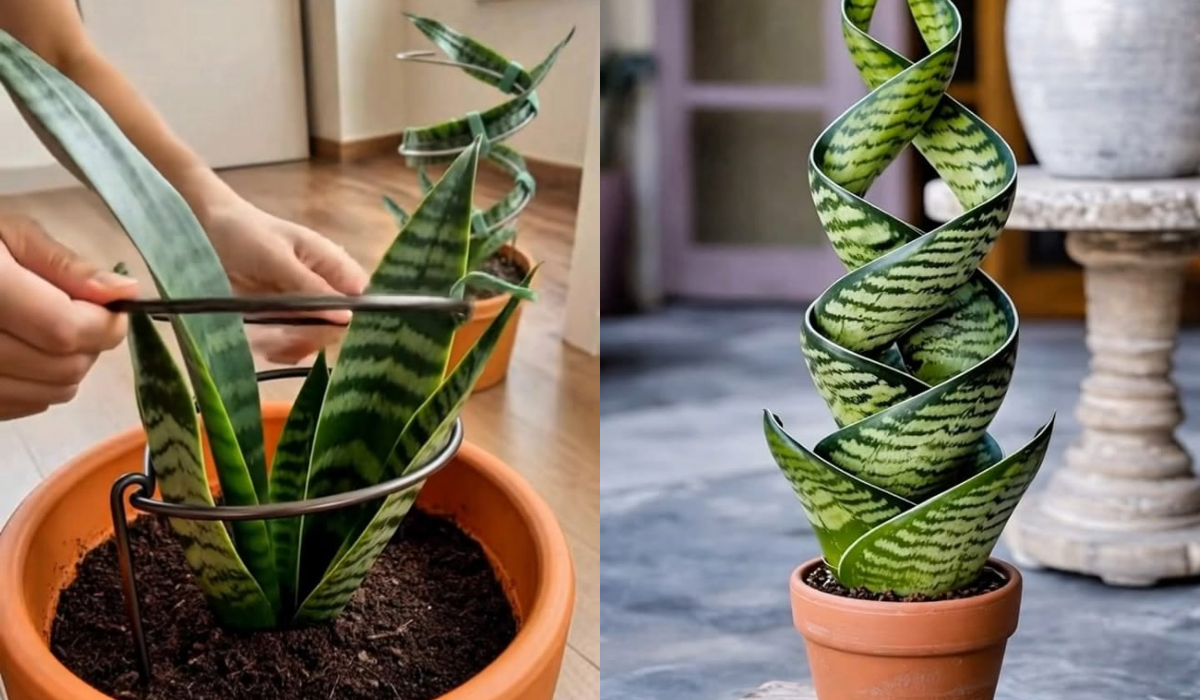
How to Grow a Spiral Snake Plant – The Snake Plant is already one of the most loved indoor plants. But when it grows in a beautiful spiral shape, it becomes something truly special. I still remember the first time I saw one—it didn’t look like a plant, it looked like modern art.
At first, I thought it was some rare variety. But over time, I learned something interesting: that stunning spiral shape is actually a training technique, not magic. With patience and the right method, you can create it at home too.
IN THIS ARTICLE
What Is a Spiral Snake Plant?
A “spiral snake plant” usually means one of two things:
- A trained plant shaped into a spiral using support and light
- A naturally twisting variety like Sansevieria francisii
In most cases, the spiral shape is created manually. The best plant for this is Sansevieria cylindrica (also called African Spear) because its round leaves are easier to bend.
Quick facts:
- Best plant: Cylindrical Snake Plant
- Light: Bright indirect light
- Water: Very low
- Time: 6–12 months for a clear spiral
Let’s be honest—you won’t get a spiral overnight. But if you’re consistent, the result is worth it.
5 Simple Tricks to Create a Spiral Shape
1. Start with the Right Plant
This step makes everything easier.
- Choose a young plant with flexible leaves
- Go for cylindrical varieties instead of flat leaves
- Avoid old, stiff plants—they break easily
From my experience, starting with the right plant saves a lot of frustration later.
2. Use a Support Frame
Snake plant leaves won’t spiral on their own—you need to guide them.
- Use a spiral trellis, wire frame, or bamboo stick
- Place it gently into the soil
- Tie the leaf to the frame using soft cloth or plant ties
Avoid tight strings or wires—they can damage the leaves.
3. Train Slowly and Gently
This is where patience comes in.
- Start from the bottom and guide the leaf upward
- Adjust ties every few days
- Give a slight twist, never force it
Think of it as guiding the plant, not bending it. If you rush, the leaf may crack.
4. Use Light as a Tool
Plants naturally grow toward light (this is called phototropism).
You can use this behavior to your advantage:
- Keep the plant in bright indirect light
- Rotate the pot regularly
- Position light on the side where you want the curve
This method gives a more natural-looking spiral, though it takes time.
5. Keep the Plant Healthy
A weak plant cannot hold a spiral shape. Good care is essential.
My routine:
- Water only when soil is completely dry (every 2–4 weeks)
- Use well-draining soil (cactus mix works best)
- Fertilize lightly once a month in growing season
Overwatering is the biggest mistake. It makes leaves soft and unable to hold shape.
Common Mistakes to Avoid
From my experience, these mistakes can ruin the spiral:
- Forcing the leaf too quickly
- Using hard wire ties
- Keeping the plant in low light
- Overwatering
- Trying with old, stiff leaves
Fixing these early makes the process much smoother.
Conclusion
Growing a spiral snake plant is not about skill—it’s about patience and consistency. There will be weeks where nothing seems to change. But if you keep guiding the plant gently, adjusting light, and maintaining proper care, the transformation will happen.
The first time you notice that soft curve forming, it feels exciting. And when the spiral becomes clear, your plant truly stands out. For me, this process changed how I see indoor plants. It’s no longer just decoration—it’s something you shape and grow with time.
Frequently Asked Questions
1. How long does it take to form a spiral?
You may see slight bending in 2–3 months, but a proper spiral takes 6–12 months.
2. Can I use a regular snake plant?
It’s possible, but difficult. Flat leaves tend to crack. Cylindrical varieties work best.
3. What if a leaf breaks?
Don’t worry. Cut it cleanly at the base. The plant will grow new leaves that you can train.
4. Can the spiral hold without support?
Yes, once the leaves harden in shape. Remove supports slowly to test stability.
5. Is there a naturally spiral snake plant?
Yes, Sansevieria francisii grows in a natural spiral pattern, but it’s less common.
How to Make a ZZ Plant Bushier: 7 Simple Tricks (From My Experience)