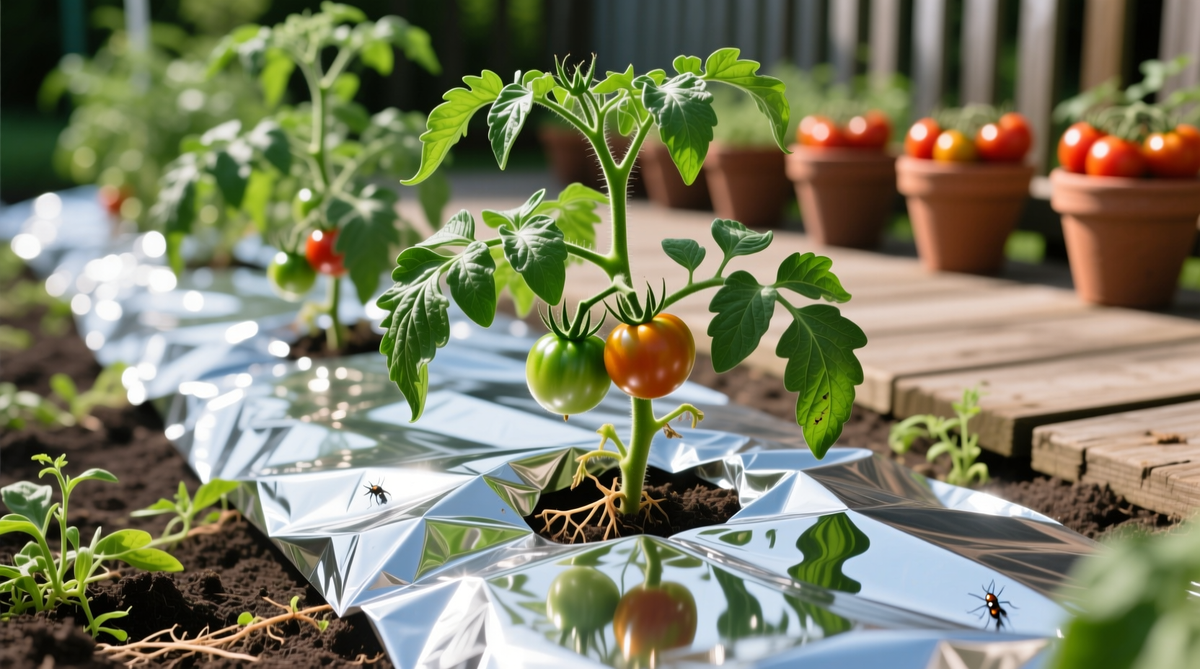
Aluminum foil might sound like a kitchen item only, but many gardeners use it in smart ways to improve plant growth—especially for tomato plants. It is not a magic fertilizer, but when used correctly, it can help your plants grow healthier, reduce pests, and improve light reflection around the plant.
I have personally tried simple reflective materials in my garden, and small changes like this can actually make a visible difference in plant health when combined with proper watering, soil, and sunlight care.
Let’s understand how aluminum foil can actually help your tomato plant grow better and how you should use it safely.
Why Tomato Plants Respond Well to Aluminum Foil
Tomato plants need a lot of sunlight, warmth, and protection from pests like aphids, whiteflies, and caterpillars. Aluminum foil helps mainly by improving the environment around the plant—not by feeding it.
It works in 3 simple ways:
- Reflects sunlight back to the plant
- Confuses or repels some pests
- Helps control soil temperature and moisture loss
This combination can support better growth, flowering, and fruiting when your basic care is already correct.
1. Improves Sunlight Exposure Through Reflection
One of the biggest benefits of aluminum foil is light reflection.
When you place foil around your tomato plant (especially at the base), it reflects sunlight upward to the lower leaves. Normally, lower parts of the plant get less light, but reflection helps in:
- Better overall photosynthesis
- Healthier lower leaves
- More balanced plant growth
- Improved flowering and fruit development
This is especially useful in small gardens, balconies, or areas where sunlight is limited for a few hours a day.
2. Helps in Pest Control Naturally
Tomato plants are often attacked by soft-bodied insects like:
- Aphids
- Whiteflies
- Thrips
Aluminum foil can help reduce these pests in two ways:
Reflective confusion
The shiny surface confuses insects because they rely on light patterns to locate plants.
Heat and light disturbance
Some pests avoid reflective and hot surfaces, so they stay away from foil-covered soil areas.
This does not completely remove pests, but it can reduce infestation pressure naturally without chemicals.
3. Maintains Soil Moisture and Temperature
Tomato plants prefer stable soil conditions. Aluminum foil helps in:
- Reducing water evaporation from soil
- Keeping soil slightly cooler during extreme heat
- Protecting roots from direct sun exposure
In hot Indian summers, this is very useful because soil can dry out quickly. Foil acts like a reflective mulch, helping the plant retain moisture longer.
4. Reduces Weed Growth Around Plants
Weeds compete with tomato plants for nutrients and water. When you place foil around the base:
- Weed seeds get less light to germinate
- Growth of unwanted grass reduces
- Soil stays cleaner and easier to manage
This indirectly supports stronger tomato plant growth because nutrients go directly to the plant instead of weeds.
5. Improves Airflow Awareness for Better Growth Observation
While this is not a direct biological effect, foil helps gardeners notice problems early.
Because the surface is clean and visible:
- You can easily spot insects
- You can see soil dryness clearly
- You can monitor plant base health
This improves your overall gardening care routine, which is very important for tomato plants.
How to Use Aluminum Foil for Tomato Plants (Correct Method)
Using foil the right way is important. Incorrect use can cause overheating or root stress.
Simple method:
- Cut aluminum foil into strips or sheets
- Place it around the base of the plant on soil
- Keep shiny side facing upward
- Leave some space near the stem (do not wrap tightly)
- Secure with small stones if needed
Best placement:
- Around soil surface like mulch
- On small sticks around plant for light reflection
- On garden bed edges for pest control barrier
Important Things You Should NOT Do
Many beginners make mistakes while using foil. Avoid these:
- Do not wrap the plant stem completely
- Do not cover the soil fully without airflow
- Do not use in extremely hot conditions without monitoring
- Do not rely only on foil for pest control
Aluminum foil is a support tool, not a complete solution.
When Aluminum Foil Works Best for Tomatoes
You will get the best results when:
- Plant is getting at least 5–7 hours of sunlight
- Soil is rich in organic compost
- Regular watering schedule is maintained
- Pest pressure is moderate
Foil works best as a support technique, not a replacement for good gardening practices.
My Simple Gardening Experience
In my own gardening practice, I noticed that tomato plants respond well when the base area is kept clean, reflective, and well-maintained. Using reflective material like foil or even light-colored mulch can improve plant energy distribution.
However, the biggest growth difference always comes from:
- Proper sunlight
- Balanced watering
- Healthy soil mix
Foil just gives a small boost in the right direction.
Final Thoughts
Aluminum foil can boost tomato plant growth indirectly by improving light reflection, reducing pests, maintaining soil moisture, and supporting better plant environment. It is a simple, low-cost gardening trick that works best when combined with proper care.
If you are growing tomatoes in pots or a small garden, you can definitely try this method and observe how your plants respond over a few weeks.
Just remember—healthy soil and consistent care will always be the real foundation of strong tomato growth.
8 Easy-Care Succulents That Reward You With Stunning Flowers