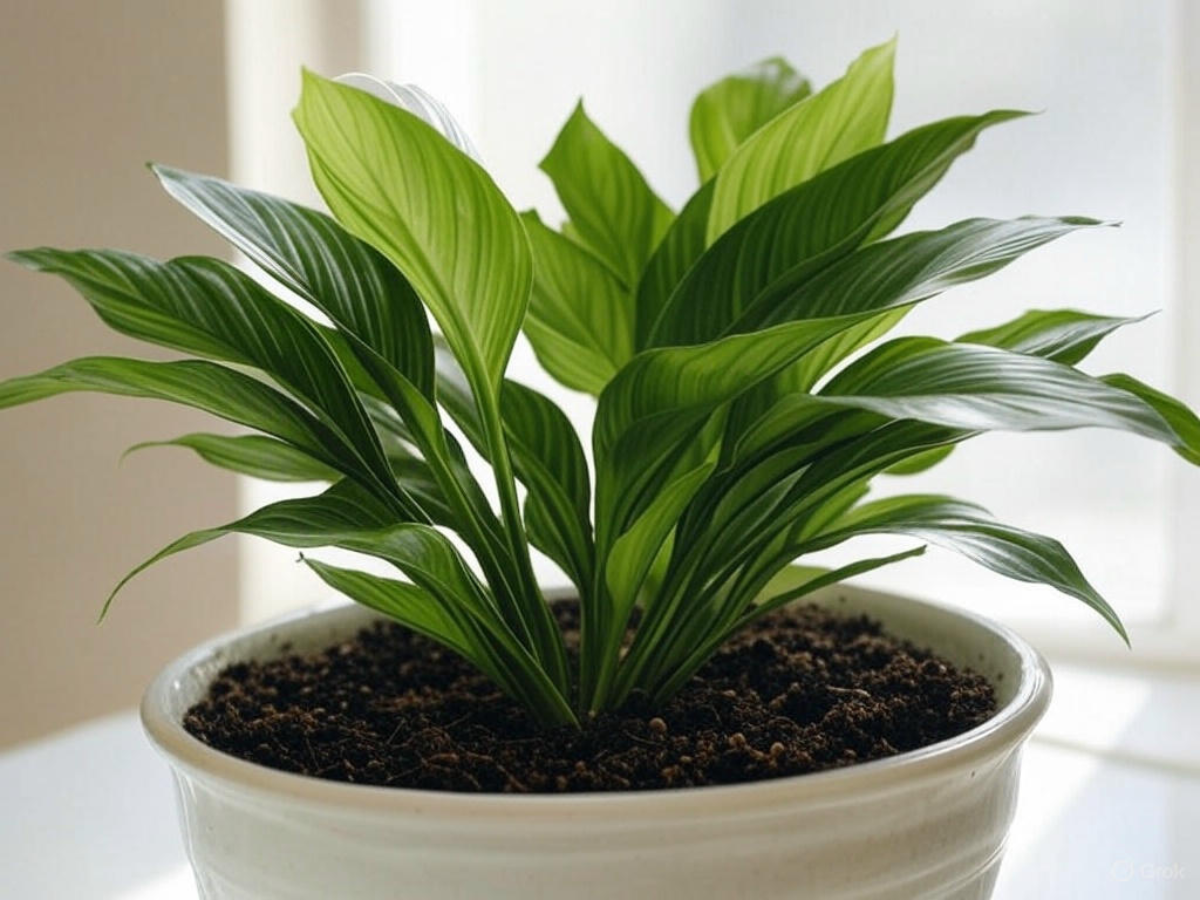
Peace Lily care Guide is simple once you understand what this elegant plant really needs. If you’re planning to grow it indoors, this guide will help you take care of your Peace Lily (Spathiphyllum) properly. It’s one of the best indoor plants for homes because it grows well in low light and purifies the air naturally.
I have been growing Peace Lilies for years, and in my experience, they are one of the most forgiving indoor plants. Even if you forget to water them for a day or two, they quickly bounce back once watered. In this post, I’ll share how I care for my Peace Lily, including tips for watering, sunlight, soil, fertilizing, humidity, and common problems that I’ve faced and how I solved them.
IN THIS ARTICLE
About the Peace Lily Plant
Peace Lily (Spathiphyllum) is a tropical plant native to Central and South America. It’s not a true lily but belongs to the Araceae family, known for its glossy green leaves and beautiful white blooms that look like flowers but are actually specialized leaves called spathes.
Peace Lily is famous for:
- Air purification – Removes toxins like benzene, formaldehyde, and carbon monoxide.
- Low maintenance – Survives easily with little sunlight and moderate water.
- Beautiful appearance – Its white blooms and dark green leaves add calmness and elegance to any room.
There are many varieties such as Sensation, Domino, and Mauna Loa, and each one has slightly different leaf sizes and growth patterns. I personally like the Domino variety because of its variegated leaves that look unique indoors.
Quick Tips for Peace Lily Care guide
Here are my quick and easy care tips that have always worked for me:
- Light: Keep in bright, indirect sunlight. Avoid direct sun.
- Water: Water when the top 1 inch of soil feels dry.
- Soil: Use well-draining, rich organic soil.
- Humidity: Peace Lilies love humidity. Mist the leaves often.
- Temperature: Keep between 18°C to 27°C.
- Fertilizer: Use a balanced liquid fertilizer once a month.
- Pot: Choose a pot with drainage holes.
- Pruning: Remove yellow or brown leaves regularly.
Watering Peace Lily
From my experience, watering is the most important factor for a healthy Peace Lily. Overwatering is a common mistake that leads to yellow leaves and root rot.
- I always check the soil before watering. If the top inch feels dry, I water the plant.
- Always use filtered or rainwater because Peace Lilies are sensitive to chemicals in tap water.
- Water slowly so the soil absorbs it evenly, and make sure excess water drains out from the bottom.
- In summer, I water my plant 2–3 times a week, and in winter, only once or twice a week is enough.
If your plant’s leaves droop, it’s usually a sign that it needs water. The good thing is – once you water it, the leaves stand back up within hours!
Best Soil for Peace Lily
A good soil mix is another secret behind a healthy Peace Lily. The soil should be well-draining but moisture-retentive.
I make my own Peace Lily soil mix at home using:
- 40% garden soil
- 30% coco peat or peat moss
- 20% compost or cow dung manure
- 10% perlite or sand
This mix keeps the roots healthy and avoids waterlogging. I also add a handful of neem cake powder to prevent fungal infections.
Sunlight Requirements
Peace Lily is an indoor-loving plant. It thrives in indirect sunlight or bright shade. I keep mine near a north-facing window where it gets enough natural light but no direct rays.
If your Peace Lily is not flowering, it might need a bit more light. Move it to a brighter spot, but never under harsh sunlight — direct rays can burn the leaves and cause brown edges.
For office or low-light corners, Peace Lily can still grow, but flowering may reduce. In that case, use a grow light for a few hours daily.
Humidity and Temperature
Since Peace Lily is a tropical plant, it loves high humidity and warm temperatures.
Here’s what I follow:
- I maintain humidity around 60–70% by keeping a humidifier nearby or misting the leaves regularly.
- Avoid placing it near air conditioners or heaters as they dry out the air.
- Ideal temperature range: 18°C to 27°C.
- Avoid temperatures below 12°C, as cold drafts can damage the plant.
If you live in a dry region, placing a tray of water with pebbles under the pot helps maintain humidity naturally.
Fertilizing Peace Lily
In my experience, Peace Lily doesn’t need too much fertilizer. Too much can burn the roots and cause yellow leaves.
I follow this simple routine:
- Use a balanced liquid fertilizer (10-10-10 NPK) once a month during spring and summer.
- In winter, I avoid fertilizing, as the plant rests.
- Sometimes, I use organic compost tea or banana peel fertilizer, which works beautifully and keeps the leaves shiny.
Common Problems and My Solutions
Here are some common Peace Lily problems I’ve faced and how I solved them:
| Problem | Cause | My Solution |
|---|---|---|
| Yellow leaves | Overwatering or old leaves | Reduce watering, trim old leaves |
| Brown leaf tips | Low humidity or fluoride in water | Use filtered water, mist regularly |
| No flowers | Low light or no fertilizer | Move to brighter spot, add fertilizer monthly |
| Wilting leaves | Underwatering | Water deeply and regularly |
| Fungus gnats | Damp soil | Let soil dry slightly, use neem oil spray |
By following these simple steps, my Peace Lily always stays green and happy.
Repotting Peace Lily
I usually repot my Peace Lily every 2 years. When roots start coming out from the bottom holes, it means the plant has outgrown the pot.
Steps I follow:
- Choose a pot that’s 1–2 inches larger than the current one.
- Gently remove the plant and shake off the old soil.
- Trim damaged roots if any.
- Refill with fresh, nutrient-rich soil mix.
- Water well and keep it in a shaded area for a few days.
Repotting gives the plant new energy and helps it produce fresh blooms.
FAQs: Everything You Need to Know About Peace Lilies
What Are the Water Requirements for a Peace Lily?
Peace lilies need moderate watering. Water once a week and allow the top inch of soil to dry before watering again. During summer, they may need more frequent watering, while in winter, they require less.
Can a Peace Lily Live Outside?
Peace lilies can survive outdoors but only in warm, humid climates. If temperatures drop below 10°C (50°F), they should be brought inside. They grow best in shade or indirect light since direct sunlight can scorch their leaves.
Why Are My Peace Lily Leaves Curling?
Curled leaves indicate stress, which may be caused by:
Underwatering. Keep the soil consistently moist but not soggy.
Too much direct sunlight. Move the plant to indirect light.
Low humidity. Increase moisture levels by misting the leaves or using a humidifier.
When & How Should I Repot a Peace Lily?
Repotting is necessary every one to two years when roots start crowding the pot.
Choose a pot that is one to two inches larger than the current one.
Use well-draining soil, such as a mix of peat and perlite.
Water thoroughly after repotting and place the plant in a shaded area for a few days.
When Is the Peace Lily Flowering Season?
Peace lilies can flower year-round, but their peak blooming seasons are spring and summer. If a plant isn’t flowering, check the light, fertilizer, and age. Younger plants may take longer to bloom.
Are Peace Lilies Toxic to Dogs?
Yes, peace lilies contain calcium oxalate crystals, which can cause health issues if ingested by dogs. Symptoms include:
Drooling , Vomiting, Mouth irritation, Difficulty swallowing
To keep pets safe, place the plant out of their reach or choose pet-friendly alternatives like Areca Palm or Spider Plant.
Conclusion
Growing a Peace Lily is one of the most peaceful experiences in indoor gardening. It not only beautifies your home but also cleans the air naturally. Based on my experience, the key to a healthy Peace Lily is moderate watering, indirect sunlight, and high humidity.
How to Transplant Peace Lily Plant – Step-by-Step Guide
How to Grow Peace Lily in Water – My Own Gardening Experience