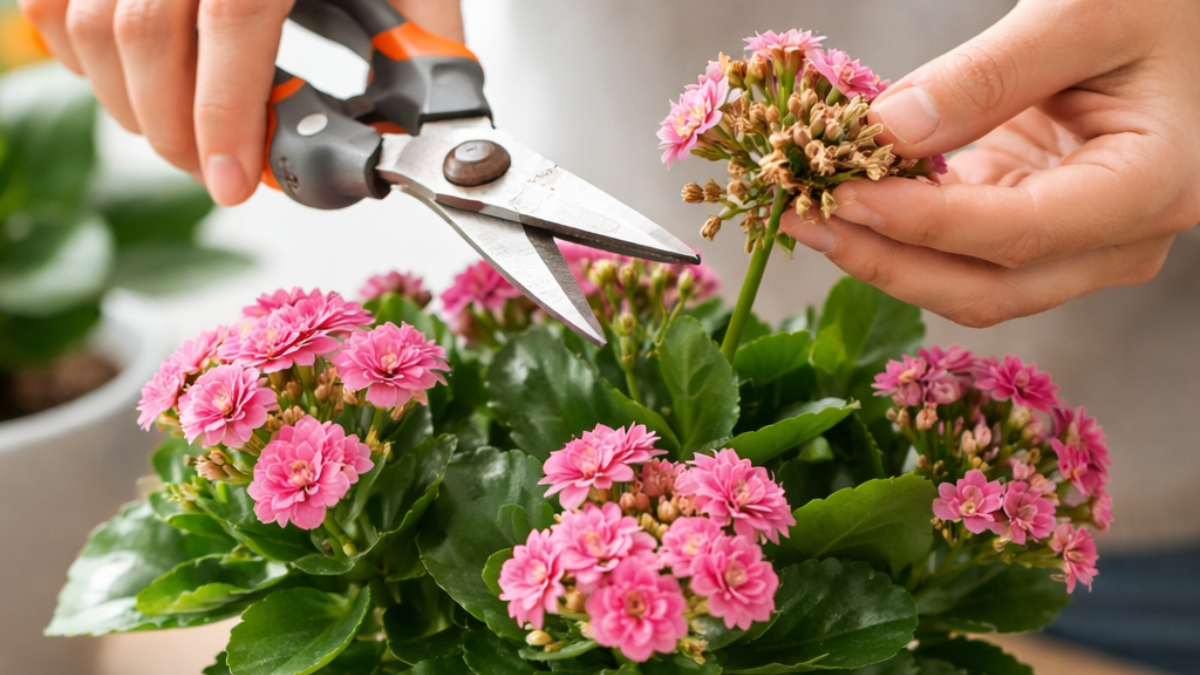
How to prune Kalanchoe plant is a common question among plant lovers because pruning plays a very important role in healthy growth and more flowers. From my personal experience of growing Kalanchoe at home for many seasons, I can say that correct pruning makes the plant bushy, strong, and full of blooms instead of tall and weak.
I have been growing Kalanchoe plants for many years, both in pots and balcony gardens. In the beginning, I avoided pruning because I was scared that cutting branches might damage the plant. But after one flowering season, my Kalanchoe became very long, leggy, and stopped producing flowers.
Then I started pruning slowly and carefully. Within a few weeks, I noticed new side branches, fresh leaves, and later more flowers than before. Since then, pruning has become a regular part of my Kalanchoe care routine.
IN THIS ARTICLE
Why Pruning Is Important for Kalanchoe
From my experience, pruning helps in many ways:
- Encourages new branch growth
- Makes the plant bushy and compact
- Helps in more flowering
- Removes weak, dead, or yellow parts
- Improves air circulation and plant health
If you don’t prune Kalanchoe, it grows tall and thin, and flowers reduce over time.
Best Time to Prune Kalanchoe
Based on what worked best for me:
- Best time: After the flowering season
- Ideal months: Spring or early summer
- Avoid pruning: Winter season
I usually prune my Kalanchoe just after flowers fade. This gives the plant enough time to recover and prepare for the next flowering cycle.
Tools I Use for Pruning
You don’t need expensive tools. I personally use:
- A sharp garden scissor
- Clean cloth or tissue
- Sometimes rubbing alcohol to clean the blades
Always clean tools before cutting. Dirty tools can spread disease to the plant.
Step-by-Step: How I Prune My Kalanchoe Plant
1. Removing Old and Dry Flowers
After flowering, the first thing I do is remove dry and faded flowers.
- I cut the flower stalk from the base
- This stops the plant from wasting energy on old flowers
- Helps the plant focus on new leaves and branches
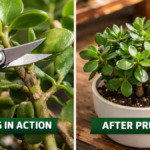
2. Cutting Leggy Stems
This is the most important step.
- I look for long, thin, stretched stems
- I cut them just above a leaf node
- I never cut more than one-third of the plant at one time
From experience, cutting above a node always results in two new branches growing from that point.
3. Shaping the Plant
I don’t cut everything at the same height.
- I trim uneven branches
- I keep the plant shape natural and balanced
- This helps the plant grow evenly from all sides
A well-shaped Kalanchoe looks beautiful even without flowers.
4. Removing Yellow and Damaged Leaves
Yellow or soft leaves attract pests and fungus.
- I remove such leaves immediately
- This improves air flow and keeps the plant healthy
After Pruning Care (Very Important)
From my experience, aftercare decides how fast the plant recovers.
Light
- Keep the plant in bright indirect sunlight
- Avoid harsh direct sunlight for a few days
Watering
- I water only when the soil becomes dry
- Overwatering after pruning can cause root rot
Fertilizer
- I avoid fertilizer for 2–3 weeks
- Once new growth appears, I use mild liquid fertilizer
Propagating Kalanchoe from Pruning Cuttings
One thing I love about pruning is propagation.
My Simple Method:
- Let cuttings dry for 24 hours
- Plant them in well-draining soil
- Water lightly
- Roots appear in 2–3 weeks
Almost every cutting I planted survived using this method.
How Often I Prune My Kalanchoe
- Light pruning: Every 2–3 months
- Heavy pruning: Only once a year, after flowering
Regular light pruning keeps the plant in perfect shape.
Conclusion
Pruning Kalanchoe is not risky if done correctly. I have seen a big difference between pruned and unpruned plants. A pruned Kalanchoe always looks healthier, grows bushier, and produces more flowers.
If you love flowering plants, don’t be afraid to prune. Just follow the right time, cut carefully, and give proper aftercare. Your Kalanchoe will reward you with beautiful blooms
How to Propagate Kalanchoe – Leaf, Stem, Water, Indoors & Seed Methods