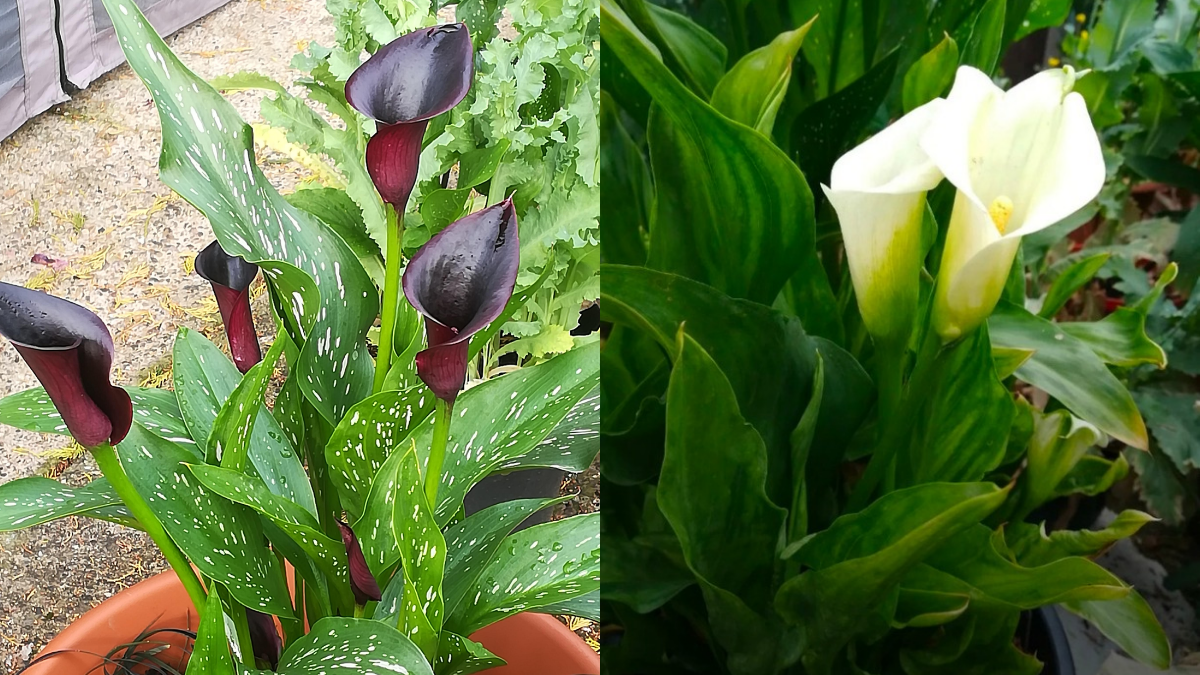
Calla Lily plant care is easier than many people think if you understand its needs for watering, light, and seasonal rest. I have grown Calla Lilies in my garden and in pots for years, and from my experience, this plant rewards you with elegant, long-lasting flowers when you treat it right.
Coming from a farming background and gardening since childhood, I enjoy trying different plants. When I first started with Calla Lilies, I thought they needed water every day like some other flowers. I was wrong. After learning from those early mistakes, my Calla Lilies now produce beautiful blooms in white, yellow, pink, and even dark purple.
About Calla Lily Plant
The Calla Lily is not a true lily, but it is famous for its elegant, trumpet-shaped flower (called a spathe) and beautiful arrow-shaped leaves with occasional white dots. It is a sophisticated plant that adds a touch of class to any indoor space or garden.
This plant originally grows in South Africa and loves warm conditions. In many gardens, it is grown from a bulb-like structure called a rhizome. Interestingly, the Calla Lily can be grown both indoors in pots and outdoors in garden beds.
| Plant Name | Details |
|---|---|
| Common Name | Calla Lily / Arum Lily |
| Botanical Name | Zantedeschia |
| Plant Type | Rhizome / Flowering Plant |
| Sunlight | Bright Indirect Light / Morning Sun |
| Watering | Regular (but not soggy) |
| Growth | Moderate, with seasonal bloom |
Quick Tips to Grow Calla Lily Successfully
From my personal gardening experience, these simple tips work best for beautiful blooms:
- Plant the rhizome in well-draining soil
- Water regularly, but let the soil dry slightly between waterings
- Provide bright, indirect light or gentle morning sunlight
- Keep in warm temperature (avoid cold drafts)
- Allow the plant to rest (dormancy) after flowering
- Fertilize during the growing season for more flowers
Following these basic tips will help your Calla Lily produce those gorgeous flowers.
Watering Calla Lily Plant
Watering is very important for Calla Lily care, but balance is the key.
From my experience, Calla Lilies like moisture but they absolutely hate sitting in water. If the soil stays too wet, the rhizome can rot quickly.
My watering routine:
- During the growing and flowering season, I water whenever the top 1 inch of soil feels dry
- This usually means watering every 3–4 days in warm weather
- I always check that the pot has drainage holes
- When the plant stops flowering and leaves start yellowing, I slowly reduce watering
Important tip:
Allow the plant to go completely dry during its winter resting period. This rest is important for next year’s flowers.
Best Soil for Calla Lily Plant
Calla Lilies grow best in soil that holds some moisture but drains quickly.
In my garden, I use a soil mix that keeps the rhizomes happy.
My soil mix:
- Garden soil
- Compost or well-rotted cow dung manure
- Sand or perlite
- A little cocopeat for moisture
This mixture gives the plant food, keeps the roots moist, and prevents waterlogging, which is perfect for Calla Lilies.
Sunlight Requirements
Calla Lilies love bright light, but they do not like harsh, burning sun.
When I first planted mine in a spot with strong afternoon sun, the leaf edges turned brown. When I moved them to morning sun and afternoon shade, they grew much better.
Best locations for Calla Lily:
- Indoor: Near an east-facing window with bright light
- Outdoor: In a spot that gets 4–6 hours of morning sun
- Balcony: A place with filtered light or partial shade
In very hot climates, protect the plant from strong midday sunlight.
Humidity and Temperature
Being from South Africa, Calla Lilies enjoy mild to warm temperatures.
In my garden, I noticed they grow actively in spring and early summer.
Ideal conditions:
- Temperature: 15°C – 25°C is perfect for growth
- Humidity: Normal room humidity is fine; they are not too fussy
Important Note:
Calla Lilies are not frost-hardy. If you live in a cold area, you must dig up the rhizomes before winter or grow them in pots that you can bring inside.
Fertilizing Calla Lily
To get those big, colorful flowers, fertilizing is very helpful.
I usually feed my Calla Lilies during their active growth phase.
Simple fertilizing method:
- When new leaves appear, I start with a balanced liquid fertilizer every 15 days
- Once flower buds appear, I switch to a fertilizer high in potash (for blooms)
- I stop fertilizing once the flowering season ends
Do not over-fertilize with nitrogen, or you will get many leaves but few flowers.
Dormancy Period (Very Important)
This is something I learned from experience. Calla Lilies need a rest.
After the flowering season ends, the leaves will slowly turn yellow and die back. At first, I thought my plant was dying. But this is natural.
What I do during dormancy:
- Stop watering completely when leaves yellow
- Let the soil go dry
- For potted plants, I keep the pot in a dry, cool place
- For ground plants in cold areas, I dig up the rhizome and store it in dry peat moss or paper bags
- After 2–3 months of rest, I replant or resume watering in spring
This rest period is the secret to getting flowers again next year.
How to Propagate Calla Lily
Calla Lilies are very easy to multiply. I have increased my collection simply by dividing the rhizomes.
Propagation by Division
Steps I personally follow:
- Wait until the plant is dormant or just before new growth starts in spring
- Carefully dig up the rhizome clump
- Identify healthy sections that have their own “eyes” (growing points)
- Use a clean knife to cut the clump into pieces
- Let the cut pieces dry for a day to form a callus (this prevents rot)
- Plant each piece in fresh soil, about 2–3 inches deep
New shoots usually appear in a few weeks.
Common Problems in Calla Lily Plant
Even with good care, small problems can appear. Here is how to fix them from my experience.
No Flowers
Possible reasons:
- Not enough sunlight
- No dormancy period (plant didn’t rest)
- Too much nitrogen fertilizer
- Rhizomes planted too deep
Yellow Leaves
Reasons may include:
- Overwatering (most common reason)
- Natural end of season (dormancy starting)
- Lack of nutrients
Leaves Rotting at Base
Possible causes:
- Soil stays too wet
- Poor air circulation
- Rhizome rot
From my experience, letting the plant dry out between waterings and providing a winter rest solves most issues.
Why Calla Lily Is a Great Plant
Many gardeners love Calla Lilies for their elegant look and beautiful flowers.
Benefits of Calla Lily plant:
- Long-lasting flowers, perfect for cutting and bouquets
- Comes in many colors: white, yellow, pink, orange, purple
- Can be grown in pots and garden beds
- The flowers have a very elegant, modern look
With proper care, including the important rest period, your Calla Lily will bloom year after year.
Final Thoughts
In my gardening experience, the Calla Lily is a special plant that teaches patience. It gives you beautiful blooms, then rests, and then comes back again. Once you understand that it needs moisture while growing, but dryness while resting, this plant is very easy to manage.
1. Is Calla Lily an indoor or outdoor plant?
It can be both. I keep mine in a pot indoors near a bright window, and also in my outdoor garden. It grows well in both places if it gets the right light.
2. How often should I water Calla Lily?
In the growing season, water when the top soil feels dry, usually every 3-4 days. In winter, stop watering and let it rest.
3. Why is my Calla Lily not flowering?
From my experience, this happens for a few reasons: not enough sunlight, no winter rest period, or too much nitrogen fertilizer.
4. Do Calla Lilies need full sun?
No, they do not like harsh afternoon sun. They grow best in morning sunlight or bright indirect light.
5. How long do Calla Lily flowers last?
The flowers look fresh for many weeks on the plant. If you cut them for a vase, they can easily last 1-2 weeks with regular water changes.
6. Is Calla Lily poisonous to pets?
Yes, unfortunately. From what I have read, they are toxic to cats and dogs if eaten. I keep them away from my pets.
7. Why are my Calla Lily leaves turning yellow?
Yellow leaves usually mean overwatering. But if the flowering season is over, yellow leaves can also mean the plant is going into its natural resting period.
8. When should I repot my Calla Lily?
I repot in early spring, just before the growing season starts. This is also the best time to divide the rhizomes and make new plants.