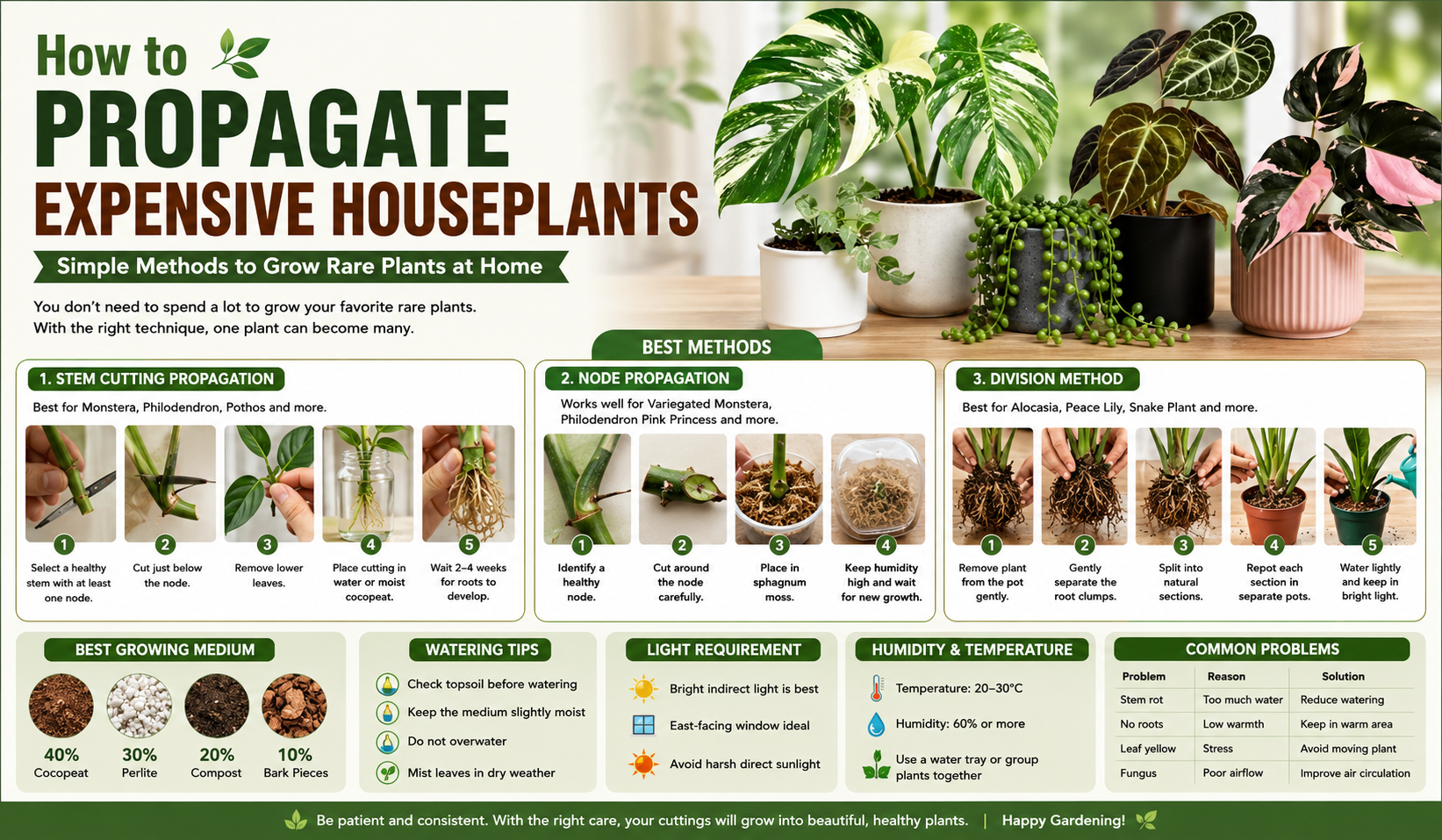
Expensive houseplants can be propagated at home with the right method, healthy parent plants, and a little patience. Many costly indoor plants like Monstera deliciosa, Philodendron Pink Princess, Variegated Monstera, and Alocasia can grow from cuttings, division, or nodes if handled properly.
I come from a farming family and have spent years growing plants at home. From my experience, expensive houseplants need a gentle approach during propagation. If you cut too early or use the wrong medium, the plant may rot. But when done correctly, one plant can become many healthy plants.
What Are Expensive Houseplants?
Expensive houseplants are indoor plants that cost more because of rare leaves, slow growth, or high demand. These are often collector plants.
Common expensive houseplants include:
- Monstera deliciosa
- Philodendron Pink Princess
- Anthurium crystallinum
- Alocasia Frydek
- String of Pearls
Quick Tips for Successful Propagation
- Always choose a mature and healthy plant
- Use a clean blade or pruning cutter
- Propagate during spring or monsoon for better success
- Keep cuttings in bright indirect sunlight
- Avoid overwatering after cutting
- Maintain humidity for rare plants
Best Ways to Propagate Expensive Houseplants
1. Stem Cutting Propagation
This is the easiest and most common method for many rare indoor plants.
Best for:
- Monstera deliciosa
- Philodendron
- Pothos
Steps:
- Select a stem with at least one node
- Cut just below the node
- Remove lower leaves
- Place cutting in water or moist cocopeat
- Wait 2–4 weeks for roots
From my experience, cuttings root faster when kept near a bright window but not in direct afternoon sun.
2. Node Propagation
Rare plants often grow from nodes, even if there are no leaves.
This works well for:
- Variegated Monstera
- Philodendron Pink Princess
Steps:
- Identify healthy node
- Cut around node carefully
- Place in sphagnum moss
- Keep humidity high
- Open occasionally for air circulation
This method is slower but useful for saving costly plants.
3. Division Method
This is best when the plant has multiple root clumps.
Suitable plants:
- Peace Lily
- Alocasia
- Snake Plant
Steps:
- Remove plant from pot
- Gently separate roots
- Split natural clumps
- Repot separately
- Water lightly
Best Growing Medium
From what I use at home, this mix works best:
- 40% cocopeat
- 30% perlite
- 20% compost
- 10% bark pieces
This keeps roots airy and avoids fungal problems.
Watering After Propagation
New cuttings need less water than mature plants.
- Check top soil before watering
- Keep medium slightly moist
- Do not flood pot
- Mist leaves in dry weather
Too much water is the main reason expensive cuttings fail.
Light Requirement
Most expensive indoor plants grow well in bright indirect light.
Good location:
- East-facing window
- Balcony shade
- Indoor near natural light
Avoid harsh direct sun because soft new leaves can burn.
Humidity and Temperature
Rare tropical houseplants prefer warm and humid conditions.
Best:
- Temperature: 20–30°C
- Humidity: 60%+
Simple trick I use: place water tray near plant or group plants together.
Common Problems During Propagation
| Problem | Reason | Solution |
|---|---|---|
| Stem rot | Too much water | Reduce watering |
| No roots | Low warmth | Keep in warm area |
| Leaf yellow | Stress | Avoid moving |
| Fungus | Poor airflow | Open space daily |
When Is Best Time to Propagate?
Best season in India:
- February to August
- Early monsoon
- Warm spring months
Avoid winter because roots grow slowly.
Conclusion
How to propagate expensive houseplants is simple once you understand each plant’s growth pattern. In my own gardening experience, stem cutting and node propagation give the best results for rare indoor plants. Start with one healthy mother plant, give it proper humidity and patience, and you can grow your own collection without buying new expensive plants every time.
How to Make a ZZ Plant Bushier: 7 Simple Tricks (From My Experience)