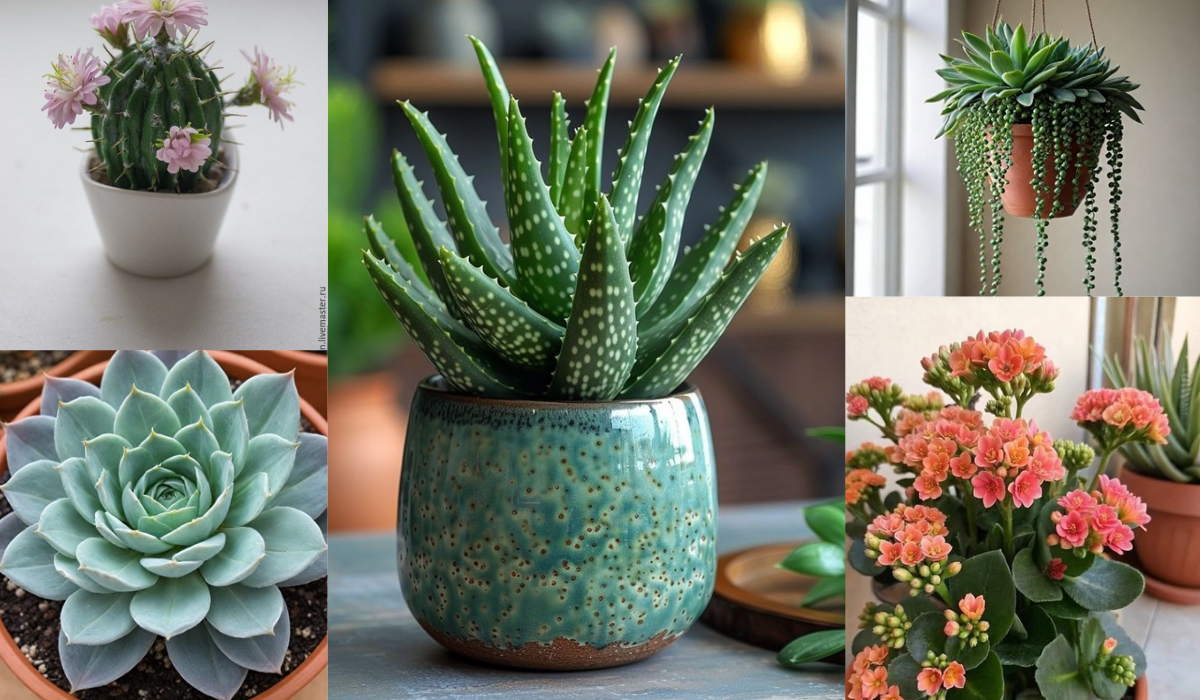
Succulents are famous for being tough, low-maintenance plants. But did you know many of them also produce beautiful flowers? I have grown succulents for years, and I still get excited every time I see a flower spike appear.
In this guide, I will share 8 easy-care succulents that bloom without much fuss. These are perfect for beginners or anyone who wants colorful flowers without daily attention .
IN THIS ARTICLE
Why Grow Flowering Succulents?
Most people think succulents are just about interesting leaves and shapes. But many varieties surprise you with stunning blooms in bright colors like red, pink, yellow, orange, and white .
The best part? They need very little care. Water them less, give them sunlight, and they reward you with flowers that can last for weeks .
The 8 Best Easy-Care Flowering Succulents
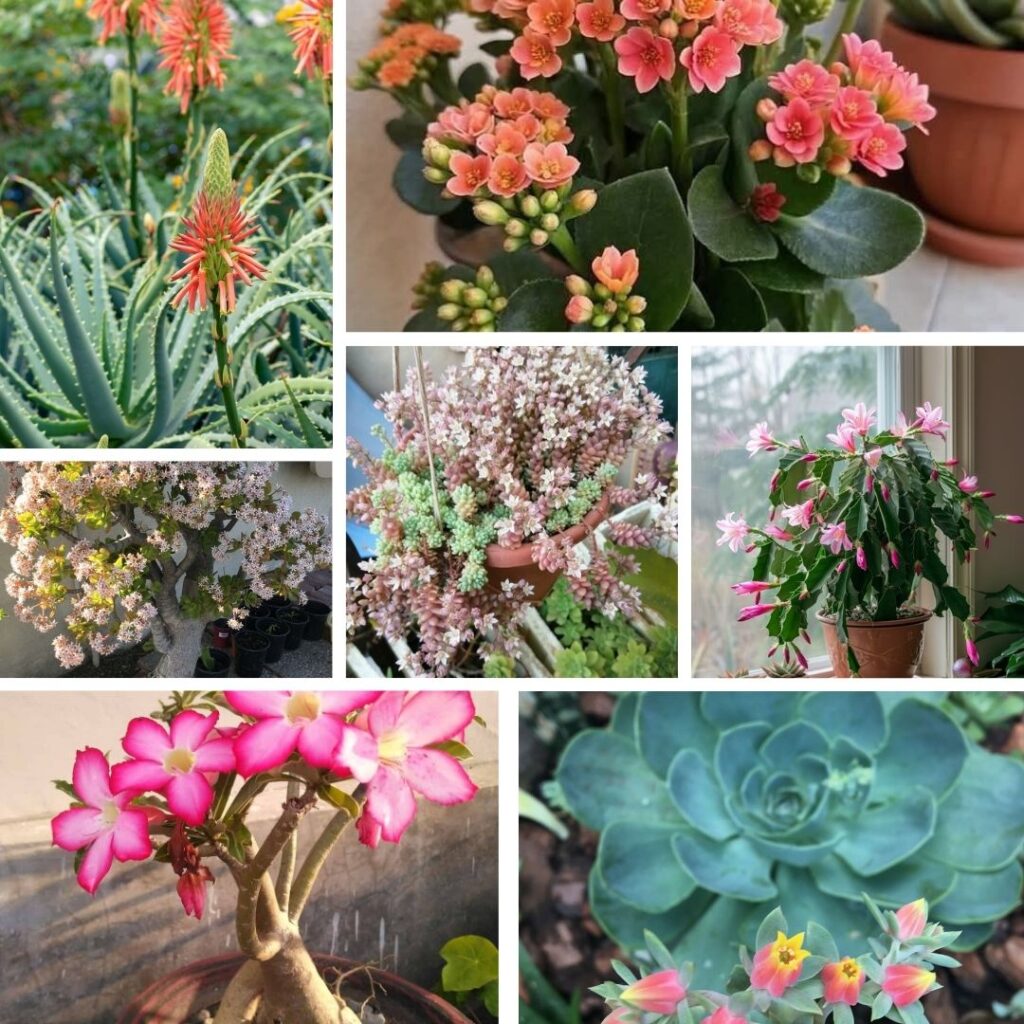
1. Kalanchoe (Flaming Katy)
Kalanchoe blossfeldiana is my top recommendation for beginners. This plant produces clusters of small, colorful flowers in red, pink, yellow, orange, and white .
Why I love it:
- Flowers last for weeks, sometimes months
- Blooms in winter and spring when most plants are dull
- Very forgiving if you forget to water
Quick care:
- Light: Bright indirect light to direct sun
- Water: Let soil dry completely between waterings
- Blooms best with 4-6 hours of direct sun daily
From my experience, Kalanchoe is often sold as a gift plant and then thrown away after flowers fade. But you can keep it for years. After blooming, cut off the dead flower stalks, and it will bloom again next season .
2. Echeveria
Echeveria is famous for its beautiful rose-shaped rosettes. But when it flowers, it sends up tall stalks with bell-shaped blooms in pink, orange, red, and yellow .
Why I love it:
- The rosette looks like a flower even without blooms
- Flowers appear in spring and summer
- Many colors and varieties to choose from
Quick care:
- Light: Bright indirect light to full sun
- Water: Allow soil to dry completely
- Protect from harsh afternoon sun
I have several Echeveria varieties on my windowsill. The ‘Curly Locks’ variety has wavy leaves and produces lovely autumn blooms .
3. Sedum (Stonecrop)
Sedums are hardy, low-growing succulents perfect for outdoor gardens. They produce clusters of star-shaped flowers in pink, red, yellow, and white that attract butterflies and bees .
Why I love it:
- Very cold-hardy, survives in many climates
- Blooms from late summer through fall
- Great for ground cover or hanging baskets
Quick care:
- Light: Full sun for best blooms
- Water: Very low water needs
- Soil: Any well-draining soil works
The Sedum palmeri variety is especially beautiful. Its green leaves turn pink in direct sun, and it produces bright yellow flowers in spring .
4. Christmas Cactus (Schlumbergera)
Unlike most succulents, Christmas cactus blooms in winter. It produces stunning tubular flowers in pink, red, white, and purple just when you need color the most .
Why I love it:
- Blooms during the holiday season
- Flowers last for weeks
- Can live for decades with proper care
Quick care:
- Light: Bright indirect light (no direct sun)
- Water: Keep soil slightly moist, not soggy
- Needs 12-14 hours of darkness in fall to set buds
This is different from other succulents. It comes from Brazilian jungles, not deserts. So it needs more water and less direct sun .
5. Jade Plant (Crassula ovata)
Jade plant is a classic houseplant with thick, shiny leaves. Mature plants produce clusters of small white or pink star-shaped flowers in winter to early spring .
Why I love it:
- Very long-lived, can grow for decades
- Symbol of good luck and prosperity
- Flowers appear when plant is mature (4-5 years old)
Quick care:
- Light: Bright light with some direct sun
- Water: Let soil dry completely
- Needs cool nights (around 60°F) to trigger blooms
Getting a jade plant to flower feels like an achievement. In my experience, placing it in a sunny spot and keeping it slightly pot-bound encourages blooming.
6. Aloe Vera
Many people don’t realize that aloe vera flowers. Mature plants (at least 4 years old) produce tall spikes with tubular yellow, orange, or red flowers .
Why I love it:
- Medicinal leaves plus beautiful flowers
- Attracts hummingbirds and bees
- Very drought-tolerant
Quick care:
- Light: Full sun to bright indirect light
- Water: Very little, let soil dry completely
- Blooms in summer
Aloe arborescens is another aloe variety with spectacular scarlet red flower spikes in late winter .
7. Desert Rose (Adenium obesum)
Desert Rose has a unique swollen trunk (caudex) that stores water. It produces stunning trumpet-shaped flowers in red, pink, white, and even double-petal varieties .
Why I love it:
- Looks like a bonsai tree with flowers
- Blooms multiple times in growing season
- Very drought-tolerant
Quick care:
- Light: Full sun, at least 6 hours daily
- Water: Moderate in summer, very little in winter
- Needs warm temperatures, protect from frost
This plant grows slowly but is worth the wait. The flowers are 2-3 inches across and last for weeks .
8. Crown of Thorns (Euphorbia milii)
Crown of Thorns has thorny stems but produces beautiful clusters of red, pink, yellow, or white flowers almost year-round .
Why I love it:
- Blooms continuously in good conditions
- Very tough and hard to kill
- Great for sunny windowsills
Quick care:
- Light: Bright direct sun for best blooms
- Water: Let soil dry between waterings
- Keep away from children and pets (sap is irritating)
The name comes from the thorny stems. But don’t let that scare you. This plant is one of the most reliable bloomers I have grown. It flowers even when neglected .
Quick Comparison Table
| Succulent | Bloom Season | Flower Colors | Light Need | Difficulty |
|---|---|---|---|---|
| Kalanchoe | Winter-Spring | Red, Pink, Yellow, Orange, White | Bright indirect to direct | Very Easy |
| Echeveria | Spring-Summer | Pink, Orange, Red, Yellow | Bright indirect to full sun | Very Easy |
| Sedum | Summer-Fall | Pink, Red, Yellow, White | Full sun | Very Easy |
| Christmas Cactus | Winter | Pink, Red, White, Purple | Bright indirect | Easy |
| Jade Plant | Winter-Spring | White, Pink | Bright light | Easy |
| Aloe Vera | Summer | Yellow, Orange, Red | Full sun | Very Easy |
| Desert Rose | Spring-Summer | Red, Pink, White | Full sun | Moderate |
| Crown of Thorns | Year-round | Red, Pink, Yellow, White | Direct sun | Easy |
General Care Tips for Flowering Succulents
Light Is the Key to Blooms
Most succulents need plenty of light to flower. Aim for 4-6 hours of direct or bright indirect light daily. Without enough light, they may grow leaves but no flowers .
Water Less, Not More
Succulents store water in their leaves. Overwatering is the fastest way to kill them. Always let the soil dry completely before watering again. In winter, water even less .
Use Well-Draining Soil
Regular potting soil holds too much moisture. Use cactus or succulent mix, or make your own with equal parts soil, coarse sand, and perlite .
Fertilize Lightly
During spring and summer, feed with a balanced fertilizer diluted to half strength once a month. Stop fertilizing in winter when growth slows .
Give Them a Rest
Many succulents need a cool, dry rest period in winter to bloom well the next season. Reduce watering and keep them in a cooler spot (50-60°F) for 6-8 weeks .
Final Thoughts From My Experience
Growing flowering succulents has been one of the most rewarding parts of my gardening journey. They ask for so little but give so much in return.
If you are new to succulents, start with Kalanchoe or Echeveria. They are forgiving, bloom easily, and will build your confidence. Place them in a sunny spot, water only when the soil is dry, and wait for the magic to happen.
Frequently Asked Questions
1. Why is my succulent not flowering?
Most likely not enough light. Move it to a brighter spot. Some succulents also need to reach a certain age (like aloe and jade) before they bloom .
2. How long do succulent flowers last?
It depends on the variety. Kalanchoe flowers can last 4-6 weeks. Christmas cactus flowers last 2-3 weeks. Echeveria blooms last 1-2 weeks .
3. Should I cut off dead flowers?
Yes. Removing spent flowers (deadheading) encourages more blooms and keeps the plant looking tidy .
4. Can I grow flowering succulents indoors?
Yes, but they need a very sunny window (south or west facing). If your home is dark, consider a grow light .
5. Do succulents die after flowering?
Most do not. But some, like Aeonium and Sempervivum (hens and chicks), are monocarpic. This means the mother plant dies after flowering, but the baby offsets live on .
How to care for indoor plants 2026 – with my experience
Best Low Maintenance Indoor Plants for Beginners (2026 Guide)